
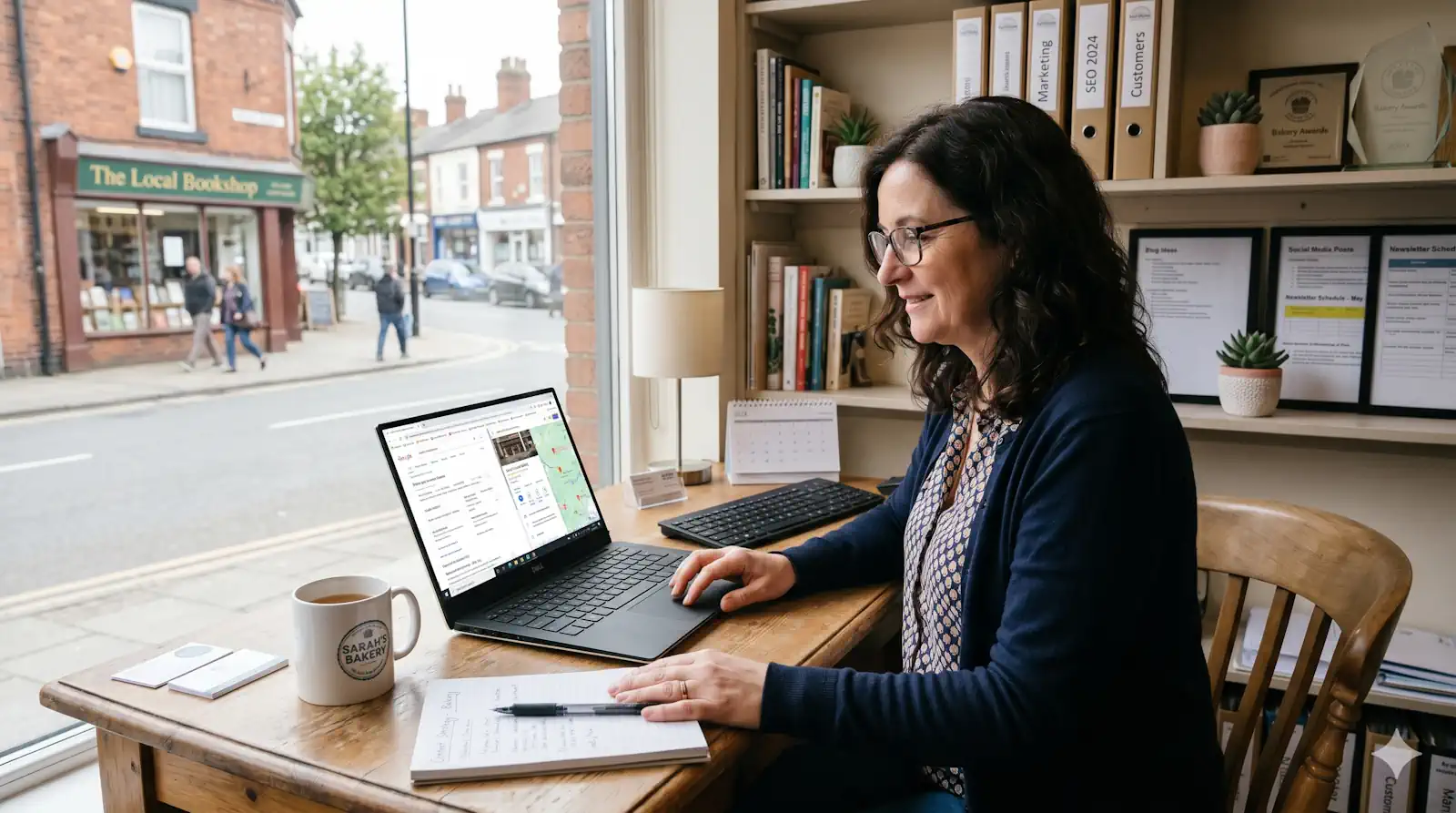
When people hear about large brands attracting huge amounts of organic traffic, it can feel a long way from the day-to-day reality of running a local business in the UK. Most local firms are not trying to become national publishers. They want more of the right people nearby to find them, trust them and make an enquiry.
The useful lesson is not to copy a big brand’s budget or scale. It is to understand the principles behind strong organic visibility and apply them sensibly at local level. The same foundations that help large websites earn attention can help a plumber in Cardiff, a solicitor in Leeds, a clinic in Bristol or a trades business in Kent.
Those foundations are simple: clear topics, useful pages, trust signals, consistent information and content that answers real questions. When these are in place, your website, Google Business Profile, Google Maps listing and AI search visibility all have better material to work with.
Big traffic usually starts with clear topical focus
One reason large websites perform well is that they tend to organise content around topics, not random posts. They do not publish one page about a subject and then move on. They build depth.
A local business can do the same without creating hundreds of pages. Start by choosing the main services, locations and customer questions that matter most. For example, an accountant might build clear content around self assessment, limited company accounts, payroll, VAT returns and local support for small businesses.
This does not mean repeating the same phrases across every page. It means making your website easier to understand. Google, AI search tools and potential customers should be able to see what you do, where you do it and who you help.
A practical local structure might include:
- One strong page for each core service.
- One main area or location page where relevant.
- Helpful advice pages that answer common customer questions.
- Case studies or examples showing real work and outcomes.
- Clear contact routes from every important page.
This gives your site a stronger base than occasional blog posts with no clear purpose.
Service pages should do more than list what you offer
Many local business websites have service pages that are too thin. They may say what the business offers, but not enough about how the service works, who it is for, what the customer should expect or why the business can be trusted.
A good service page should help someone make a decision. It should explain the service in plain English, answer obvious concerns and show that you understand the local customer’s situation.
For example, instead of only saying boiler repairs available, a stronger page might explain typical repair issues, how appointments are handled, what areas are covered, whether emergency support is available, what qualifications matter and how customers can prepare before calling.
This approach helps people, but it also helps search engines and AI systems understand your relevance. Clear, specific pages provide better evidence than vague claims.
Helpful content should support the buying journey
Blog content is often treated as a box-ticking exercise. A business posts something because it has been told that fresh content helps SEO. Freshness on its own is not enough. The content needs to serve a purpose.
Think about the questions customers ask before they are ready to buy. They may want to know costs, timescales, risks, options, regulations, maintenance requirements or whether a service is right for them.
Useful article topics often come from everyday conversations, such as:
- How much does this usually cost in the UK?
- What should I check before choosing a provider?
- What is the difference between two similar services?
- How long does the process normally take?
- What problems should I avoid?
- When should I repair, replace or upgrade?
These topics are not just for Google. They also help build confidence with visitors who are comparing local options. If your website explains things clearly, you reduce doubt and make it easier for people to contact you.
Trust signals matter more as search becomes more selective
Organic visibility is not only about keywords. Trust is becoming more important across search results, Google Maps and AI-generated answers. A local business needs to show that it is real, active and credible.
Trust signals can include reviews, staff information, qualifications, trade memberships, local photos, examples of completed work, clear policies and consistent business details. These should not be hidden away. They should appear naturally across your website and your wider online presence.
Your Google Business Profile also plays a key role. It should match your website information, show accurate opening hours, include suitable categories, display good photos and collect genuine customer reviews over time.
For local businesses, consistency is important. If your website says one thing, your Google listing says another and directory listings show old details, you make it harder for search systems and customers to trust the information.
Local authority is built through useful proof
Large brands often build authority through recognition, links, mentions and extensive content. Local businesses can build authority in a more grounded way.
Start with proof that is close to the customer. This might include local case studies, before and after examples, testimonials, project locations, community involvement or partnerships with other local organisations. The aim is not to boast. It is to help people see that you have real experience solving the type of problem they have.
A roofing company could show recent work in nearby towns. A law firm could explain its experience with common local client needs. A clinic could provide clear practitioner profiles and treatment guidance. A home improvement business could explain materials, planning considerations and aftercare.
This kind of proof supports both Visibility and Authority. It makes your business easier to assess and gives search systems more confidence about what you are known for.
AI search rewards clear, well-structured information
AI search tools and answer engines rely on clear information from websites, business profiles and other trusted sources. They are less likely to recommend a business if the information is vague, inconsistent or difficult to interpret.
This is where local businesses have an opportunity. You do not need to sound like a big corporate brand. In fact, plain English is often better. Explain your services clearly. Use specific service names. Mention the areas you genuinely serve. Answer common questions directly. Keep business details accurate.
If AI tools are trying to understand which local business is relevant to a particular need, they need evidence. A well-organised website, complete Google profile, genuine reviews and helpful content all contribute to that evidence.
You can learn more about this wider shift in AI and Local Visibility, especially if you want your business to be understood beyond traditional search results.
This article is based on the ideas discussed in the embedded video, with added UK local business context and practical guidance for business owners.
Do not copy big brands blindly
There is a risk in looking at successful large websites and assuming every tactic should be copied. Local businesses do not usually need large content teams, complex publishing calendars or pages for every possible variation of a topic.
The better approach is to take the principle and scale it down. If a large brand wins by being comprehensive, a local business can win by being clear and complete in its niche. If a large brand builds trust through reputation, a local business can build trust through reviews, proof of work and visible local experience.
A small website can still be strong if every page has a job. Ten useful pages will usually be better than fifty weak ones. The goal is not to look big. The goal is to be the obvious, trustworthy choice for the right local searches.
A practical plan for improving organic visibility
If you want to apply this approach, start with a simple audit. You do not need specialist software for the first pass. Look at your website as if you were a cautious customer comparing several local businesses.
- List your core services. Check whether each one has a clear, useful page.
- Check your location signals. Make sure your areas served are accurate and not exaggerated.
- Review your trust signals. Add relevant reviews, qualifications, photos, case studies or examples where appropriate.
- Improve your Google Business Profile. Ensure the details are accurate and match your website.
- Collect common questions. Use them to plan helpful content that supports customer decisions.
- Link related pages together. Help visitors and search engines move between services, advice and contact pages.
- Update old content. Remove outdated information and improve pages that are thin or unclear.
This is not a one-off task. Organic visibility improves when your online presence becomes clearer and more useful over time. Small, steady improvements are often more realistic for local businesses than large bursts of activity followed by silence.
Measure the right signs of progress
Traffic is useful, but it is not the only measure. A local business should also pay attention to enquiries, calls, direction requests, form submissions, profile views and the quality of leads.
If a page attracts fewer visitors but brings in better enquiries, it may be doing its job well. If your Google Business Profile starts generating more calls from nearby customers, that matters. If people mention that they read a helpful guide before contacting you, that is a sign your content is supporting trust.
Good organic strategy is not about chasing every possible visitor. It is about helping the right people find enough information to choose you with confidence.
Keep the strategy simple and consistent
The businesses that benefit most from organic visibility usually treat it as part of their normal marketing, not as a quick campaign. They keep information accurate, answer customer questions, show proof of work and improve important pages over time.
For a UK local business, that is a realistic and worthwhile approach. You do not need to compete with national brands on scale. You need to become clearer, more trusted and more useful within the market you actually serve.
If your website, Google Business Profile and content all work together, you give Google, Google Maps, AI search tools and customers a stronger reason to understand and recommend your business.
Useful Related Pages
Related Articles

Using AI Images and Thumbnails to Improve Local Business Visibility
AI image tools can help local businesses create clearer thumbnails, service images and promotional visuals. The key is using them with purpose, not as a replacement for real trust signals.
Choosing the Right AI Tool for Local Business Visibility
AI tools can help local businesses save time, improve content and support visibility, but the tool matters less than how you use it. Here is a practical way to choose the right AI assistant for your business.