
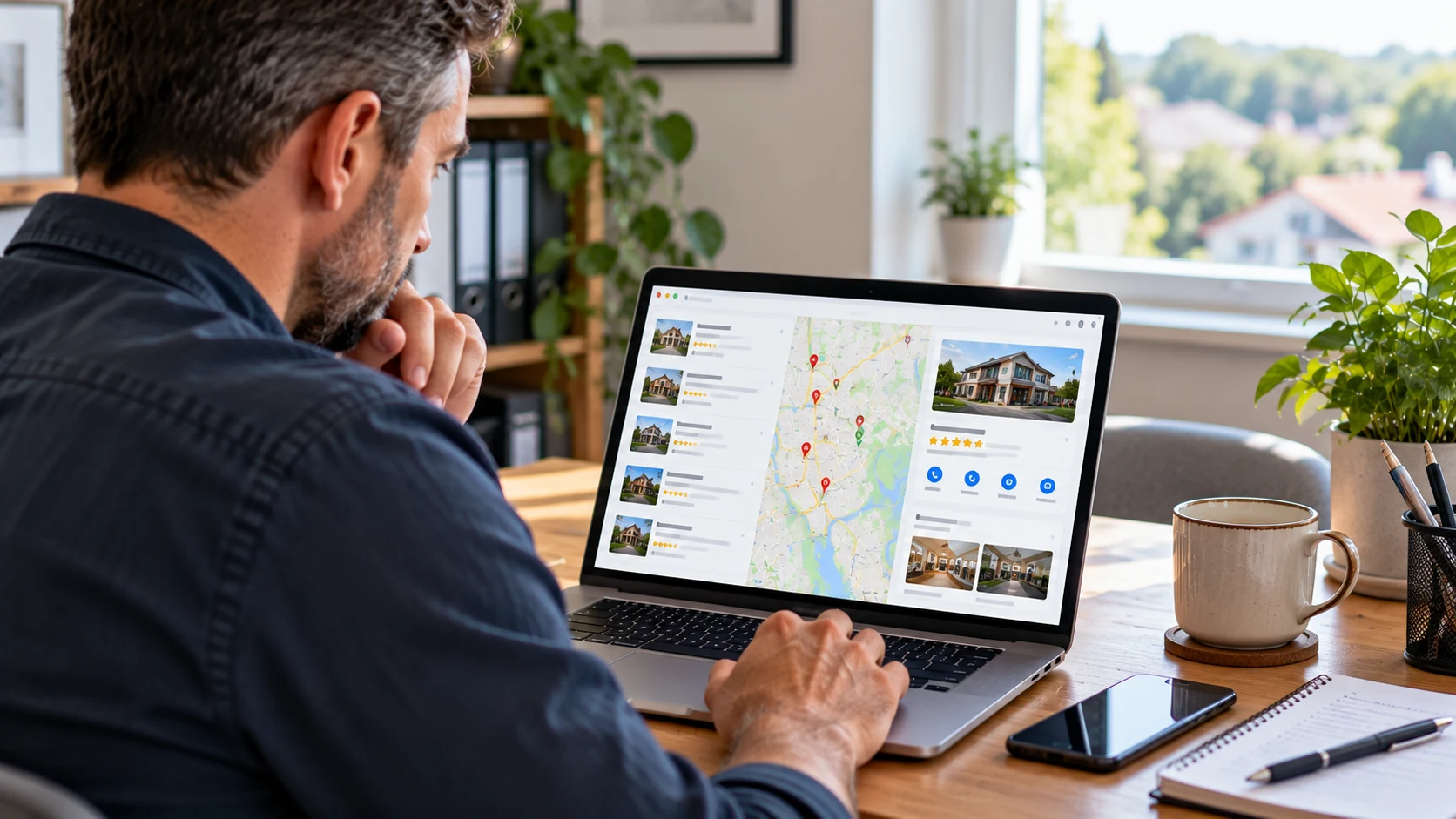
If your local business depends on enquiries from nearby customers, Google visibility matters. For many people, Google Search and Google Maps are the first places they go when they need a tradesperson, clinic, restaurant, accountant, repair service, or local supplier.
The good news is that local visibility is not only about having the biggest website or the largest advertising budget. It is often about being clearer, more complete, more trusted, and more consistent than the businesses you appear beside.
This article looks at practical ways UK local business owners can compete more effectively in Google Maps and local search, without overcomplicating the process.
Understand what you are really competing for
When people talk about outranking competitors, it can sound like a single battle for one keyword. Local search is more varied than that.
Your business may appear for searches based on:
- The service someone types in
- Their location at the time of searching
- The area named in the search
- Your business category
- Your reviews, photos, opening hours, and website content
- How well Google understands what you do
A plumber in Cardiff, a solicitor in Leeds, and a dog groomer in Bristol all face different search results depending on the customer, device, wording, and map area. This is why local SEO should not be treated as a one-off task. It is an ongoing visibility system.
Start with the basics of your Google Business Profile
Your Google Business Profile is often the most visible part of your online presence. It can appear before your website, especially in Google Maps and local pack results.
Before looking for advanced tactics, check the basics carefully. Many local businesses lose opportunities because their profile is incomplete, vague, or out of date.
Review these details:
- Business name, address, and phone number
- Opening hours, including bank holidays where relevant
- Primary and secondary categories
- Services or products listed on the profile
- Business description
- Website link and appointment link if used
- Photos that reflect your real business
Small mistakes can create friction. If your opening hours are wrong, people may not call. If your category is too broad, Google may not connect you with the right searches. If your services are missing, your competitors may look more relevant.
Choose categories and services with care
Your primary category is one of the clearest signals you give Google about your business. It should describe what your business is, not every service you offer.
For example, a business that installs boilers may need a different primary category from one that mainly offers general plumbing. A beauty salon may need to be specific if its main income comes from nails, brows, or skin treatments.
Secondary categories can help, but they should still be relevant. Adding categories that do not reflect your business can confuse the picture rather than improve it.
Your services section should be written for real customers. Use plain language. Include the services people actually ask for. Avoid turning every service into a list of repeated keywords. Google needs clarity, and customers need confidence.
Make your profile look active and trustworthy
A neglected profile can still rank, but it does not always convert well. Customers compare businesses quickly. They look at reviews, photos, opening hours, and how professional the listing feels.
You do not need to post every day or upload endless images. A sensible routine is enough.
- Add recent photos of your work, premises, team, vehicles, or completed projects
- Reply to reviews in a calm and professional way
- Use Google Posts when you have helpful updates, offers, seasonal information, or announcements
- Keep your services and hours current
- Check questions and answers if they appear on your listing
Trust is built through evidence. A customer is more likely to contact a business when they can see signs that it is real, active, and responsive.
Reviews help customers choose, not just Google rank
Reviews are important for local visibility, but they are also important for decision-making. A business with clear, recent, detailed reviews often feels safer to contact than one with very little public feedback.
The best approach is steady and honest. Ask happy customers to leave a review when the job is complete, the appointment has gone well, or the project has been delivered. Do not pressure people, offer rewards, or write reviews on their behalf.
Make it easy by sending a direct review link and a short message. For example, you might say that reviews help local customers understand what it is like to work with you.
When replying, avoid copy-and-paste answers. A simple, genuine response is enough. Mention the service where natural, thank the customer, and keep the tone professional.
Use your website to support local visibility
Your Google Business Profile is important, but it should not work alone. Your website helps explain your services in more detail and gives Google more context about your business.
Each important service should have a clear page where possible. That page should explain what you do, who it is for, where you provide it, common questions, and how someone can enquire.
For example, instead of having one short page that says you offer “repairs”, a local business may benefit from separate pages for boiler repairs, emergency plumbing, bathroom leak repairs, or commercial maintenance, provided those are genuine services.
Your website should also make location clear. This does not mean creating dozens of thin town pages. It means being specific about your real service area, your base, and the communities you serve.
If you want a more structured checklist, the Google Business Profile Optimisation Guide is a useful next step.
Look at competitors, but do not copy them blindly
Competitor research is useful when it helps you spot gaps. It becomes less useful when it turns into imitation.
Search for your main services in your area and look at the businesses that appear consistently. Pay attention to:
- Their primary category
- The number and quality of reviews
- How recently they have added photos
- Whether their website clearly supports the service searched
- How complete their profile appears
- What questions customers seem to ask in reviews
The aim is not to copy their wording. The aim is to understand what Google and customers may be finding useful. You can then improve your own presence in a way that reflects your real business.
This article is based on the ideas discussed in the embedded video, with added UK local business context and practical guidance for business owners.
Measure the right things
It is easy to become distracted by rankings. Rankings can change depending on the searcher’s location, device, search phrase, and browsing history. They are useful to monitor, but they are not the whole picture.
For a local business, the more useful questions are:
- Are more people finding the profile?
- Are calls increasing from Google?
- Are website visits from the profile improving?
- Are direction requests relevant to the business?
- Are enquiries coming from the areas you want to serve?
- Are customers mentioning that they found you on Google?
Google’s reporting is not perfect, but it can show useful patterns. If you are unsure what the numbers mean, this guide to Google Business Profile Insights Explained may help you interpret them more calmly.
Build a simple monthly visibility routine
Local SEO becomes easier when it is part of a routine rather than a rushed reaction. You do not need to spend hours every week. A monthly checklist can keep your profile and website in better shape.
A practical routine could include:
- Check your opening hours and contact details
- Add a few recent, genuine photos
- Reply to any new reviews
- Ask recent happy customers for feedback
- Review whether your services are still accurate
- Add a useful Google Post if you have something relevant to share
- Check which searches and actions are appearing in your profile insights
- Improve one website page connected to an important service
This is not glamorous work, but it is often what separates active local businesses from competitors who only update things once every few years.
Think beyond quick wins
Some local SEO improvements can make a difference quickly, especially if your profile was incomplete or inaccurate. Other improvements take longer because trust, relevance, and authority build over time.
A strong local presence usually comes from several connected parts working together: a complete Google Business Profile, a useful website, genuine reviews, accurate information, relevant photos, and consistent activity.
You cannot control every Google result. You can control how clearly your business is presented, how easy you make it for customers to choose you, and how consistently you maintain your online presence.
Final thoughts
Competing in Google Maps is not about tricks. It is about making your business easier for Google to understand and easier for local customers to trust.
Start with the essentials. Check your profile, improve your service information, build reviews steadily, keep your photos fresh, and make sure your website supports what your profile says.
If you do that consistently, you give your local business a stronger chance of being found, considered, and contacted by the right people in your area.
Useful Related Pages
Related Articles
Why a Google Business Profile Cannot Replace a Proper Website
A Google Business Profile supports local discovery, but a proper website gives a business greater control, depth and long-term ownership of its information.
How Small Businesses Can Build Stronger Google Reviews in 2026
Practical advice for UK local businesses on improving Google review quality, responses and review habits without gimmicks or risky shortcuts.