
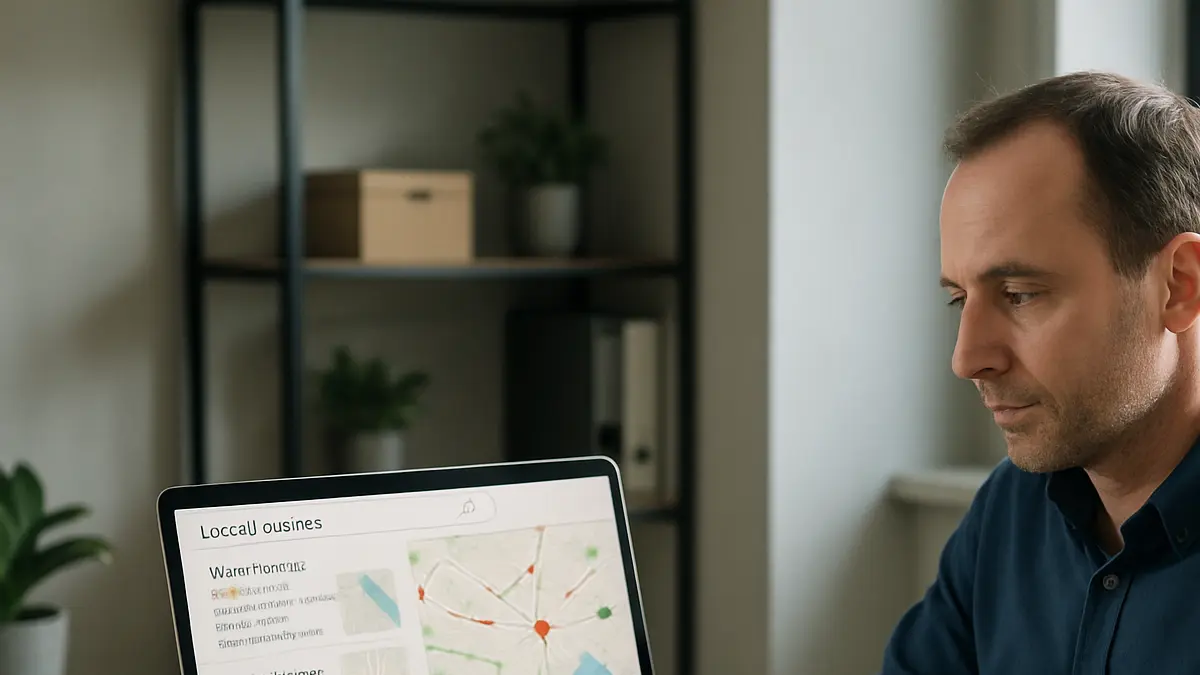
Most local business owners keep an eye on competitors in one way or another. You notice who appears above you in Google Maps. You see whose vans are parked around town. You hear customers mention other firms they have spoken to.
That sort of awareness is useful, but it can also become frustrating if it is not turned into something practical. The aim is not to copy another business. It is to understand what Google, customers and AI search tools can clearly see about them, then compare that with what they can see about you.
Good competitor research is calm, simple and ethical. You are not looking for secrets. You are looking at public information: websites, Google Business Profiles, reviews, photos, service pages, local mentions and search results. These are the same signals potential customers can see before they decide who to call.
Start with the right question
The wrong question is: How do I beat this competitor? That usually leads to rushing, copying and chasing tactics that do not fit your business.
A better question is: Why might Google or a customer understand their business more clearly than mine?
This changes the whole exercise. You are not trying to become a clone. You are trying to make your own business easier to understand, easier to trust and easier to choose.
For a local plumber, solicitor, accountant, builder, clinic, dog groomer or independent shop, visibility is rarely about one single factor. It is usually the result of many small signals working together. A competitor might have clearer service pages, more specific reviews, better photos, stronger local references, more consistent contact details or more helpful content.
Look at what appears in Google first
Before using any tool, search like a customer. Use a private browser window if you want a cleaner view, but do not overcomplicate it. Search for the service and area you care about, such as emergency plumber in Cardiff, family solicitor in Leeds or roof repairs near me.
Write down what you see:
- Which businesses appear in the map results?
- Which websites appear underneath the map?
- Do the same names appear more than once?
- Do any businesses have particularly strong review snippets?
- Are there directories, local news sites or trade bodies appearing?
This gives you a practical view of the market. It also shows whether Google is relying only on business websites, or whether it is also using external references such as directories, articles, local pages and review platforms.
If your business only appears in one place, while competitors appear across several trusted places, that may be a visibility gap worth addressing.
Review competitor websites without copying them
A competitor website can tell you a lot, but it is important to look at structure rather than wording. Copying their text, page titles or layout will not build a stronger business. It can also make your site feel generic.
Instead, look for what their site makes clear. Do they have individual pages for important services? Do they explain the areas they cover? Do they show real photos, team details, accreditations, case examples or customer questions?
For example, a local electrician might have one page called Services, while a competitor has separate pages for consumer unit upgrades, landlord certificates, EV charger installation and emergency call-outs. That does not mean you should copy their pages word for word. It may mean your own website is too vague for Google and customers to understand the full range of work you do.
Your website should answer the questions people already have before they pick up the phone. If competitors are doing that more clearly, use it as a prompt to improve your own explanations in your own voice.
Check the Google Business Profile signals
For many local businesses, the Google Business Profile is just as important as the website. In some sectors, it is the first serious impression a customer gets.
Compare your profile with two or three visible competitors. Look at the basics first: categories, services, opening hours, photos, review quality and business description. Then look at freshness. Have they added recent images? Are they posting updates? Do reviews mention specific services or locations?
This is not about chasing every feature for the sake of it. It is about making sure your profile gives Google and customers enough confidence. A thin profile with old photos, broad wording and few service details can make a genuine business look less active than it really is.
If your profile needs attention, the Google Business Profile Optimisation Guide is a useful starting point for reviewing the main areas that influence how your business is presented.
Pay attention to authority, not just rankings
Rankings are easy to obsess over, but authority is often the deeper issue. A business that appears trustworthy across the web gives search engines and AI systems more to work with.
Authority can come from different places, including local press mentions, trade body profiles, quality directory listings, business announcements, partnerships, awards, case studies and helpful content. None of these should be treated as magic tricks. They are simply ways of confirming that your business exists, does real work and is connected to a real place or sector.
If a competitor is mentioned on local news websites, supplier pages, community pages or industry sites, that may help explain why they appear more established online. Again, the answer is not to copy every link they have. The answer is to build your own footprint in a way that matches your business.
This is where Visibility And Authority becomes important. Local SEO is not only about editing a website. It is also about creating a wider pattern of trust around the business.
Use tools as a guide, not a verdict
Free SEO tools can be helpful when you want a quick view of a competitor site. They may show estimated traffic, visible pages, backlinks, keywords or technical issues. These tools are not perfect, and the numbers are often estimates, but they can still point you towards useful questions.
For example, a tool might show that a competitor receives attention for a particular service page. That does not automatically mean the page is brilliant. It means the topic may matter in your local market. You can then decide whether your own website explains that service properly.
A tool might also show that a competitor has links from local organisations or industry websites. Rather than trying to replicate every link, ask whether your business has genuine relationships, memberships, suppliers, case studies or announcements that deserve to be visible online.
The best use of these tools is to spot patterns. Do not let them replace judgement. A small local business does not need to act like a national brand. It needs to be clear, credible and visible to the right people in the right area.
This article is based on the ideas discussed in the embedded video, with added UK local business context and practical guidance for business owners.
Turn competitor research into a simple action list
Competitor research only helps if it leads to sensible action. After reviewing the search results, websites, Google profiles and authority signals, create a short list of improvements. Keep it realistic. A list of five useful actions is better than a spreadsheet of fifty things you will never touch.
A practical action list might include:
- Improve your main service page so it explains who you help, where you work and what the service includes.
- Add two or three separate pages for important services that are currently hidden inside one general page.
- Upload recent, genuine photos to your Google Business Profile.
- Ask customers for more specific reviews after completed work.
- Check that your business name, address, phone number and website are consistent across important listings.
- Look for one or two genuine local or industry places where your business could be mentioned.
This approach avoids panic. It also helps you build momentum. Each improvement makes your business easier to understand and easier to trust.
Do not ignore AI search
AI search tools are changing how people find and compare businesses. They often draw on public information from websites, business profiles, reviews, directories and trusted third-party sources. If your business has a weak online footprint, there may not be enough reliable information for these tools to include or describe you properly.
This does not mean you need to chase every new AI feature. It means the basics matter more than ever. Clear service pages, consistent business details, helpful explanations, strong reviews and external references all make it easier for search systems to understand who you are.
If you want to explore this further, the article on Ai And Local Visibility explains why business information needs to be clear across more than one place online.
Keep the focus on your own business
Competitor research can quickly become a distraction if you check too often. You do not need to monitor every move another business makes. A sensible review once a quarter is enough for many local businesses.
The purpose is to see the market clearly, not to become anxious about it. Some competitors will have larger budgets. Some will have been online for longer. Some may be doing things that are not worth copying. Your advantage may be better service, stronger expertise, a more personal approach or a clearer local focus.
The job is to make those strengths visible. If customers already value the way you work, your online presence should reflect that. Your website, Google Business Profile and wider authority signals should all support the same message: this is a real, active, trustworthy local business that can help.
A practical way to begin this week
Choose one service and one location that matters to your business. Search for it in Google. Pick two competitors that appear strongly. Spend no more than thirty minutes reviewing what is publicly visible about them. Then compare it with your own presence.
Look for gaps in clarity, not just gaps in ranking. Is your service explained properly? Are your photos current? Do your reviews mention the work you want more of? Are there trusted places online that confirm your business exists and operates in your area?
From there, choose one improvement and complete it. Then choose the next. Local visibility is usually built through consistent, practical work rather than one dramatic change.
Learning from competitors is not about copying their business. It is about seeing what Google and customers can already see, then making sure your own business is represented clearly, honestly and confidently.
Useful Related Pages
- Visibility And Authority
- Visibility And Authority Support
- Press Coverage Business Announcements
- Authority Network System
- Home
- About
- Contact
- Services
- News and information
- Local Business Marketing
- Local Business Marketing Support
- More Customers For Local Service Businesses
- Complete Local Business Marketing Guide
- Ai And Local Visibility
- Why Google And Ai Ignore Most Local Businesses
- Google Business Profile
- Google Business Profile Support
- Google Ai Free Video
- Google Business Profile Optimisation Guide
- Google Posts For Local Businesses 2026
- Google Business Profile Insights Explained
- Google Business Profile Photos Guide
Related Articles

How to Check a Local Competitors Online Visibility Without Overcomplicating It
Learn how to review a local competitor’s online visibility in a simple, useful way so you can improve your own website, Google presence and authority.

Backlinks for Local Businesses: What Helps, What Does Not, and What to Avoid
Backlinks can support local visibility, but not every link is useful. Here is a practical guide for UK local businesses on building authority without falling for poor link-selling tactics.